Monday, October 28, 2013

Can the 'right' helmet prevent concussions?

Can the 'right' helmet prevent concussions?


[ Back to EurekAlert! ]

PUBLIC RELEASE DATE:

28-Oct-2013


[


| E-mail

]


Share Share

Contact: Debbie Jacobson
djacobson@aap.org
847-434-7084
American Academy of Pediatrics


Study finds no difference in concussion risk among high school football players using different brands and ages of helmets; custom mouth guards do not reduce risk


ORLANDO, Fla. While many football helmet and mouth guard manufacturers claim that their equipment will lessen impact forces and reduce concussion risk, neither a specific brand nor a higher cost were associated with fewer concussions in adolescent athletes, according to an abstract presented Monday, Oct. 28 at the American Academy of Pediatrics (AAP) National Conference and Exhibition in Orlando.

"Our preliminary findings suggest that neither any specific brand of football helmet nor custom mouth guards result in fewer concussions in kids who use them," said lead co-investigator Margaret Alison Brooks, MD, MPH, FAAP. "Despite what manufacturers might claim, newer and more expensive equipment may not reduce concussion risk. So is it worth the significant extra cost to families and schools?"


Each year, approximately 40,000 sport related concussions (SRC) occur in U.S. high schools. In the abstract, "Association of Helmet Brand and Mouth Guard Type with Incidence of Sport Related Concussion in High School Football Players," researchers tested various mouth guard brands, including custom-fit mouth guards, and new and older football helmets.


The study involved 1,332 football players at 36 high schools during the 2012 football season. Players completed a pre-season demographic and injury questionnaire, and athletic trainers recorded incidence and severity of SRC throughout the year.


Helmets worn by players were manufactured by Riddell (52 percent), Schutt (35 percent) and Xenith (13 percent). The helmets were purchased in 2011-2012 (39 percent), 2009-2010 (33 percent) and 2002-2008 (28 percent). Mouth guards worn by players included generic models provided by schools (61 percent) and specialized mouth guards (39 percent) custom fitted by dental professionals or specifically marketed to reduce SRC.


A total of 115 players (8.5 percent) sustained 116 SRCs in 2012. There was no difference in SRC rate based on the type of helmet worn, or the year the helmet was purchased. Concussion severity (based on the number of days lost from play) was no different for players wearing Riddell, Schutt or Xenith helmets. The SRC rate for players who wore a specialized or custom-fitted mouth guard was higher than for players who wore a generic mouth guards.


Properly maintained and fitted helmets remain important to prevent skull fractures and scalp lacerations in football players, said Dr. Brooks. However, "because the brain is floating freely inside the skull, I think most experts doubt whether it is possible to ever develop a helmet design that can prevent concussion."

###

The American Academy of Pediatrics is an organization of 60,000 primary care pediatricians, pediatric medical subspecialists and pediatric surgical specialists dedicated to the health, safety and well being of infants, children, adolescents and young adults. For more information, visit http://www.aap.org.


[ Back to EurekAlert! ]

[


| E-mail


Share Share

]


AAAS and EurekAlert! are not responsible for the accuracy of news releases posted to EurekAlert! by contributing institutions or for the use of any information through the EurekAlert! system.


Can the 'right' helmet prevent concussions?


[ Back to EurekAlert! ]

PUBLIC RELEASE DATE:

28-Oct-2013


[


| E-mail

]


Share Share

Contact: Debbie Jacobson
djacobson@aap.org
847-434-7084
American Academy of Pediatrics


Study finds no difference in concussion risk among high school football players using different brands and ages of helmets; custom mouth guards do not reduce risk


ORLANDO, Fla. While many football helmet and mouth guard manufacturers claim that their equipment will lessen impact forces and reduce concussion risk, neither a specific brand nor a higher cost were associated with fewer concussions in adolescent athletes, according to an abstract presented Monday, Oct. 28 at the American Academy of Pediatrics (AAP) National Conference and Exhibition in Orlando.

"Our preliminary findings suggest that neither any specific brand of football helmet nor custom mouth guards result in fewer concussions in kids who use them," said lead co-investigator Margaret Alison Brooks, MD, MPH, FAAP. "Despite what manufacturers might claim, newer and more expensive equipment may not reduce concussion risk. So is it worth the significant extra cost to families and schools?"


Each year, approximately 40,000 sport related concussions (SRC) occur in U.S. high schools. In the abstract, "Association of Helmet Brand and Mouth Guard Type with Incidence of Sport Related Concussion in High School Football Players," researchers tested various mouth guard brands, including custom-fit mouth guards, and new and older football helmets.


The study involved 1,332 football players at 36 high schools during the 2012 football season. Players completed a pre-season demographic and injury questionnaire, and athletic trainers recorded incidence and severity of SRC throughout the year.


Helmets worn by players were manufactured by Riddell (52 percent), Schutt (35 percent) and Xenith (13 percent). The helmets were purchased in 2011-2012 (39 percent), 2009-2010 (33 percent) and 2002-2008 (28 percent). Mouth guards worn by players included generic models provided by schools (61 percent) and specialized mouth guards (39 percent) custom fitted by dental professionals or specifically marketed to reduce SRC.


A total of 115 players (8.5 percent) sustained 116 SRCs in 2012. There was no difference in SRC rate based on the type of helmet worn, or the year the helmet was purchased. Concussion severity (based on the number of days lost from play) was no different for players wearing Riddell, Schutt or Xenith helmets. The SRC rate for players who wore a specialized or custom-fitted mouth guard was higher than for players who wore a generic mouth guards.


Properly maintained and fitted helmets remain important to prevent skull fractures and scalp lacerations in football players, said Dr. Brooks. However, "because the brain is floating freely inside the skull, I think most experts doubt whether it is possible to ever develop a helmet design that can prevent concussion."

###

The American Academy of Pediatrics is an organization of 60,000 primary care pediatricians, pediatric medical subspecialists and pediatric surgical specialists dedicated to the health, safety and well being of infants, children, adolescents and young adults. For more information, visit http://www.aap.org.


[ Back to EurekAlert! ]

[


| E-mail


Share Share

]


AAAS and EurekAlert! are not responsible for the accuracy of news releases posted to EurekAlert! by contributing institutions or for the use of any information through the EurekAlert! system.


Source: http://www.eurekalert.org/pub_releases/2013-10/aaop-ct101713.php
Category: When Was The First Parachute Jump?   Manny Machado   wes welker   Nothing Was The Same Leak   The Butler  

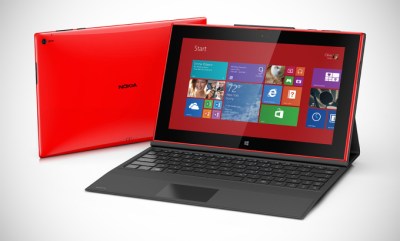
Qualcomm: Nokia Lumia 2520 “Bigger, Faster, Lower Power” Than Microsoft's Surface 2


If you, like me, took some offline time this weekend, we’re a bit late to the latest slap fight in the world of Windows RT. Until recently, there was only one functional player in the Windows RT space – Microsoft, and its Surface 2 tablet – but Nokia has stepped into the ring, and one of its suppliers is talking a little trash.


No shame in that, of course, bragging is as old as language, but how Qualcomm – the supplier of the Nokia Lumia 2520 Windows RT tablet’s processor – is taking the Surface 2 to task is interesting.


Both the Nokia 2520 and the Surface 2 run Windows RT, so when it comes to software, they are on parity. Certainly, you could argue that the Surface 2 might behave better with Windows RT than rival devices, given that Microsoft builds both, but that’s edge work.


Qualcomm, as quoted by CNet, thinks that the Lumia 2520  is “bigger, faster, [and] lower power” than Microsoft’s rival Surface 2 tablet. Ok.


The kicker to this is that, for the Surface line of tablet hybrids, the hardware component of the devices has largely not been the point of complaint raised by reviewers and users. Instead, it’s been the software that the Surface devices run on – Windows 8 at first, and now Windows 8. 1- that was the sticking point. Windows 8 was not ready at launch. And Windows 8.1 has yet to be tested against consumer demand.


Why Qualcomm is trumpeting the “speeds and feeds” of the Lumia 2520 is simple: It provides the silicon that powers the device. Microsoft’s Surface 2 runs on Nvidia chips.


Keep in mind, however, that Microsoft is in the process of buying the Nokia assets that built the Lumia 2520, so we could see reconciliation. For now, however, Nokia’s tablet does directly challenge its future brother. Microsoft recently reported that Surface unit volume doubled in its most recent quarter, compared with the sequentially preceding quarter. Surface revenue totaled $400 million for that period.


Here’s the question: Will the Windows 8.1 and Windows RT 8.1 markets become akin to the Android realm, where OEMs race to best the hardware specifications of their rivals in their devices?


Source: http://feedproxy.google.com/~r/Techcrunch/~3/qp0OxFjc-Io/
Tags: edward norton   john lennon   liberace   Nintendo 2DS   syria  

Sunday, October 27, 2013

Switched On: ­­­Behind enemy lines


Each week Ross Rubin contributes Switched On, a column about consumer technology. This week marks the ninth anniversary of the column.


DNP Switched On Behind enemy lines


A decade ago this month, and a year before the debut of Switched On, Apple made the decision to release iTunes for Windows following what was reportedly a profanity-laced debate among Apple's executive team. The decision cemented the iPod's place as the best-selling portable media player and started the company's string of successes beyond the PC.


Most of the time, the various major ecosystem vendors work on improving their own products and helping their closest partners. However, sometimes companies see an opportunity to plant seeds in the gardens of their competitors for a variety of reasons. For example, Google Maps for iOS became a priority after Google was booted as Apple's default maps provider. Microsoft's SmartGlass, which runs on iOS and Android devices, allows the Xbox more flexibility in creating a second-screen experience, while the Wii U bears the expense of a tablet in every box. Apple's Boot Camp seemed like a value-add that required nominal effort once the company switched the Mac to Intel processors.


But two recent moves -- or at least reports of them -- by Google and Microsoft would have the two rivals transplanting their hearts right into the chests of competitors, presumably to have them burst through the host like a creature from Alien.


"Chrome OS" in Windows 8


Chrome and its namesake OS have been gaining market share, in part because of the low price of Chromebooks. And while its move to Android and iOS has shored up Chrome's numbers, the desktop is still important. Browser vendors haven't rushed to embrace Microsoft's "Modern" touch interface, but an experimental version of Chrome would create a Chrome OS-like user interface as a full-screen app in Windows if Chrome were the default browser.


On one hand, just about any Modern app is good news for Microsoft these days.


On one hand, just about any Modern app is good news for Microsoft these days. However, the design of Chrome OS is about as much of a true Modern app as Office is these days. And ultimately, the progress of Chrome, with its focus on HTML-based apps that look and act virtually the same everywhere, further compromises the differentiation that all OS vendors are seeking to achieve.


Windows Phone on Android


Unlike the implementation of the Chrome OS interface as a Modern Windows 8 app, Microsoft is apparently talking to hardware partners about putting the full Windows Phone operating system in Android devices. This might involve using the same phone hardware for both operating systems or actually dual-booting the same phone with Android and Windows Phone.


The former option would represent a bit of a throwback as many of the first Windows Phones had guts largely repurposed from Android devices -- but not from state-of-the-art ones. Now, though, Windows Phone supports a broader array of components as well as larger screens and faster processors, which might make parity easier. Besides, with Microsoft's imminent move to produce its own hardware, and with overwhelming market share in the Windows Phone category, it may care less about differentiation from third parties.


The dual-boot scenario is harder to picture.


The dual-boot scenario is harder to picture. Dual-boot options require a restart by definition. And while phone boot-up times can be faster than those of a PC, that kind of switching isn't very convenient on the go. Some have criticized the amount of extra space that two operating systems might take up on a phone with limited resources. If Microsoft really wants to reach out to Android users, another option could be offering support for Android apps riding on top of its operating system, similar to what BlueStacks has done. However, as we've seen from BlackBerry, adopting Android compatibility can be a double-edged sword that lowers the incentive to produce native apps.


When one is behind enemy lines, there's a greater risk of being captured.


Source: http://www.engadget.com/2013/10/27/behind-enemy-lines/?ncid=rss_truncated
Similar Articles: Blackfish   Jake Locker   911   beyonce   Yosemite Fire  

Have You Ever Gotten Sick from Using a Gadget?

Have You Ever Gotten Sick from Using a Gadget?

There are lots of diseases and health issues for humans to worry about in general, and yet we tend to create more of them as time goes on. Lead poisoning, cancer from tanning beds, lots of stuff from smoking. And now that we're addicted to gadgets it was only a matter of time before the health effects starting showing.

Read more...


Source: http://feeds.gawker.com/~r/gizmodo/full/~3/B_4jM4NmDq4/have-you-ever-gotten-sick-from-using-a-gadget-1453003962
Related Topics: betrayal   taylor swift  

PM ally hails win in Georgia presidential poll as rival concedes


Tbilisi (AFP) - An ally of billionaire Georgian Prime Minister Bidzina Ivanishvili claimed a crushing first-round victory in a presidential vote Sunday after his main opponent conceded defeat and exit polls pointed to an overwhelming win.

Giorgi Margvelashvili, a little-known academic from the premier's Georgian Dream coalition, took at least 66 percent of the vote in two television exit polls, well ahead of former parliament speaker David Bakradze of outgoing President Mikheil Saakashvili's United National Movement party, in second place with around 20 percent in the ex-Soviet state.

"I thank you all so much. It is our shared victory," Margvelashvili told cheering supporters at a rally in Tbilisi.

Basking in the win for his coalition, tycoon Ivanishvili said at the rally he had been certain of victory.

"All together we will build a Georgia which we dream about. I congratulate you all," Ivanishvili said.

Fireworks lit up the evening sky in the capital shortly after polls closed in the Caucasus republic of some 4.5 million, as Margvelashvili's supporters honked car horns and cheered.

Runner-up Bakradze quickly conceded defeat, saying he accepted the result of the exit polls.

"I congratulate Giorgi Margvelashvili on his electoral win and the trust expressed in him by the Georgian people," Bakradze said in televised comments.

He said the vote confirmed Saakashvili's UNM party as the main opposition in the country, with exit polls giving combative ex-parliament chairwoman Nino Burjanadze under 10 percent in third place.

Sunday's vote calls time on US-ally Saakashvili's decade in power and his fractious year-long cohabitation with arch-enemy Ivanishvili, who has promised to also step down in the coming weeks.

In a televised address shortly after exit polls came out, Saakashvili urged his supporters to respect the vote outcome even though he called it a "serious deviation" from Georgia's path towards development.

"The Georgian voters have expressed their will. I want to tell those who are not happy with the results: we must respect the majority's opinion," Saakashvili said, standing on a podium lined with Georgian flags.

"Those who do not like these results -– and whose feelings I very well understand –- do not lose your hearts."

If confirmed, Margvelashvili will assume a weakened role as constitutional changes will see the next president cede many key powers to the prime minister.

The lower stakes meant that voting was slow throughout the day and the final turnout was just 46.6 percent, according to the election commission.

Ivanishvili, 57, wrested power from Saakashvili's party in parliamentary polls last year, marking Georgia's first orderly transition of power.

Earlier in the day voters had said they saw Margvelashvili as a clean break from Saakashvili.

At a polling station in central Tbilisi, professor Serge Tsutskiridze said he had picked "reserved" Margvelashvili because he wanted to see a new style of leader after Saakashvili's divisive rule.

"We don't need another emotional and headstrong president," said the 67-year-old.

'Open and transparent vote'

US ambassador to Georgia Richard Norland said the vote seemed to be going smoothly as he toured polling stations earlier Sunday.

"What's important is that this vote proceeds today in a way that's peaceful, fair, open and transparent and, so far, things seem to be moving in that direction."

Transparency International said the vote was "calm" but that the number of procedural violations was up on last year's vote.

Georgia under Saakashvili made joining NATO and the European Union a main priority, and Margvelashvili has pledged to press on with that drive.

He has also promised to try to mend ties with Moscow shattered by a brief 2008 war that saw Georgia effectively lose two breakaway regions.

Ivanishvili's coalition will retain control of the government but the tycoon has promised to name a successor and step down, claiming he has achieved his goals.

Western allies have expressed concern over perceived selective justice that has seen a string of Saakashvili's close allies arrested since his party lost power.

Saakashvili has said he wants to remain active in politics but Ivanishvili has labelled him a "political corpse" and warned he could face prosecution.

During a turbulent decade, Saakashvili -- who came to power after ousting Eduard Shevardnadze in the 2003 "Rose Revolution" -- cut corruption, built new infrastructure and revived Georgia's economy.

But his reforms angered many and police brutality used in crushing opposition protests tarnished his image as a pioneering democrat.

Official results are expected to be released overnight.

Source: http://news.yahoo.com/georgia-set-elect-president-watershed-poll-021712281.html
Related Topics: affordable care act   Alison Pill   lamar odom   pharrell   Jose Iglesias  

German government raises 2014 growth outlook


BERLIN (AP) — The German government is raising its forecast for the country's economic growth in 2014 to 1.7 percent and says there should be a healthy increase in exports.

Wednesday's forecast was just above the 1.6 percent growth that the government predicted in April. It left this year's growth outlook unchanged at 0.5 percent.

It's predicting a pickup in exports, a traditional strength of Europe's biggest economy, after they increased only sluggishly this year. The forecast is for exports to grow 0.3 percent in 2013 and 3.8 percent next year.

Faster economic growth should boost the already-healthy labor market. The government says the number of people in work should increase next year to 42 million from 41.8 million this year, with some 2.9 million unemployed.

Source: http://news.yahoo.com/german-government-raises-2014-growth-outlook-100815464--finance.html
Similar Articles: Grambling State University   Cricinfo   gravity   marshawn lynch   Rosh Hashanah 2013  

In The Long Run, Rebuilding Coastlines Could Prove Too Costly


The Long Beach High School marching band prepares to march down the Long Beach boardwalk during a ribbon-cutting ceremony Friday.


Andrew Burton/Getty Images


The Long Beach High School marching band prepares to march down the Long Beach boardwalk during a ribbon-cutting ceremony Friday.


Andrew Burton/Getty Images


One year ago Tuesday, Hurricane Sandy bore down on the East Coast, devastating shoreline communities from Florida to Maine.


Many of these areas have been rebuilt, including the Long Beach boardwalk, about 30 miles outside New York City. Officials held a ribbon-cutting ceremony for the new boardwalk Friday.


Ninety percent of the funding for the restoration came from the federal government. The Federal Emergency Management Agency paid $44 million to repair the devastation.


Jack and Roseanne Vanderbeck love the new boardwalk. They come every weekend to power walk along the beach.


"I missed it last winter," says Jack Vanderbeck. "The old boardwalk actually was getting beat up a lot. This is much easier to walk on. People now don't get splinters."


"It's really beautiful," his wife adds. "They really did a great job."


Geologist Rob Young knows that it will be difficult to convince locals that rebuilding the coastlines might not be worth the cost.


Andrew Burton/Getty Images


Geologist Rob Young knows that it will be difficult to convince locals that rebuilding the coastlines might not be worth the cost.


Andrew Burton/Getty Images


But should the federal government pay for shore restorations, when the beaches are sure to be hit and damaged by future storms?


Rob Young, who directs the Program for the Study of Developed Shorelines at Western Carolina University, is one of many geologists who say taxpayers are shelling out too much cash to rebuild coastal areas that will continue to be ravaged by the effects of climate change.


"After storms, the federal government creates this moral hazard, in my opinion," Young says. "We spend billions of dollars rebuilding coastal communities, a lot of it in place."


The argument for the spending is that the coastal economy is worth the money. But Young asks, "If the coastal economy is that strong and vibrant, why can't they pay for the risk of being here themselves?"


Stay Put Or Retreat?


Young suggests that some coastal areas should be abandoned altogether because climate change is eating away at the nation's shorelines.


"The primary response post-Sandy has been to elevate some homes and elevate some infrastructure," he says. "So it's like you're standing in the river and the flood is coming, and instead of getting out of the river, you just roll up your pant legs, or hike up your skirt."


Besides Long Beach, other parts of the New York area were hit hard by Hurricane Sandy, including lower Manhattan. Damages, including lost economic activity, were estimated at close to $20 billion.


Mayor Michael Bloomberg set up a task force to look at how the city could better protect itself from a rising sea level and increasing storm events linked to climate change. Seth Pinsky, who ran that task force and is now executive vice president of RXR Realty, agrees that certain parts of Manhattan are vulnerable during storms.


But Pinsky says retreating is not an option.

"We're dealing with 400 years of settlement here in New York City," he says. "In New York today, we have 70,000 buildings — representing over 500 million square feet of built area — that are in our 100-year flood plain. The idea that we're going to be able relocate those people, their jobs, their homes, that built infrastructure in any foreseeable future is just not realistic."


An Expensive Precedent


People like Charlie Minch love the beach and the new boardwalk. He drives here a couple times a week with his sister, Carol Halmy.


"It's nice," Minch says. "The boardwalk itself is nice. And it gives me something to do."


His sister says it's "certainly worth the money they put into it."


But geologist Rob Young says that sooner or later the money it takes to rebuild coastal areas — storm after storm — isn't going to be worth it anymore. Making that case to the people who live here, though, will be difficult.


"Any discussion of changing the way we do business at the coast and potentially not rebuilding some areas makes local residents nervous," Young says. "The issue is how long into the future can we afford as a nation to hold every shoreline — on East Coast to the Gulf Coast and the West Coast — in place."


Last week, the Department of the Interior released $162 million for research and restoration to protect the Atlantic Coast. The money will go to 45 projects, from Maine to North Carolina. Such funding sets an expensive precedent, Young says.


"If we have a big storm that hits Florida now, they are going to expect the same," he says. "They are going to expect the federal government to come in and rebuild beaches from Miami to Jacksonville. Can we afford to do that?"


Source: http://www.npr.org/2013/10/27/241111392/in-the-long-run-rebuilding-coastlines-could-prove-too-costly?ft=1&f=1001
Tags: Case Keenum   Supernatural   Katy Perry Vma 2013   Raz B   Hasnat Khan